MRSA Photos and Staph Infection Pictures
Could you have MRSA? The images and links below will help you answer this and other key questions. These infections can be dangerous, difficult to treat and contagious spreading through communities. Even young, healthy people can catch them. Unfortunately, they are often misdiagnosed by doctors.
What Does MRSA Look Like?
MRSA and Staph often cause skin infections and six typical types are pictured below. CAUTION: MRSA pictures are graphic and may be disturbing. Note that some of the images show worst-case infections. Typical infections are often less severe.
6 Common Types of MRSA
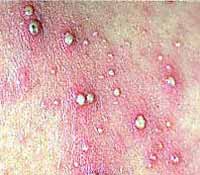
1. Folliculitis – infected hair follicles that form small blisters or pus-filled bumps.
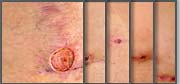
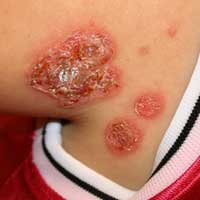
2. Impetigo – Crusty skin lesions.
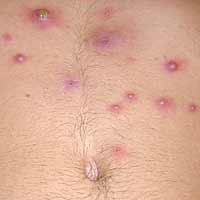
3. Furunculosis – deeper infected follicle of hair (also called a boil) are common types of infection.
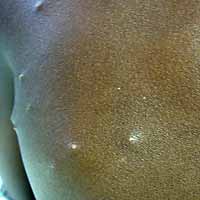
Furunculosis bumps can also have yellow or white pus inside and often drain on their own.
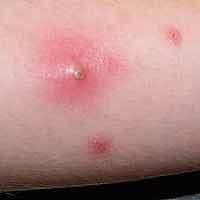
4. Boils – deep infection of the hair follicle (also called a furuncle). Surrounding area is often warm to the touch and can be very tender.
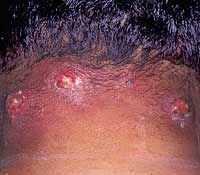
5. Carbuncles – larger, open boils. These open sores contain pus and dead tissue and can be quite contagious.
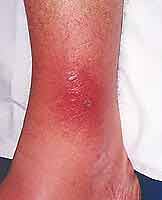
6. Cellulitis – deep, swollen, under-skin tissue infections.
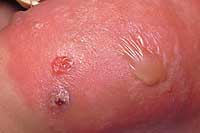
Cellulitis areas are often pink, red or purple in color and can be swollen and painful. This one was caused by Staph and was from a vaccination. MRSA Image Credit: CDC/ Allen W. Mathies, MD/ California Emergency Preparedness Office (Calif/EPO), Immunization Branch
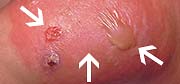


Staph versus MRSA Pictures: What’s the difference?
MRSA is a type of Staph bacteria, therefore pictures of Staph vs MRSA can look identical. Also, many of the symptoms are the same. A test can tell you if you have MRSA or just a Staph infection, or if it’s a spider bite.
While looking at pictures of MRSA and Staph can help you answer the question what does MRSA look like, only a laboratory test can show whether you actually have it or not. Only use these MRSA photos as a guide, not as a substitute for a test from your doctor to confirm what is causing your infection.
Spider Bite or MRSA?

MRSA skin infections are easily mistaken for a bite from the brown recluse spider. Credit: CDC PHIL
MRSA is commonly mistaken as a spider bite.
These infections can be easily mistaken for a brown recluse bite, which can have a very similar appearance on your skin. Unless you saw a spider actually bite you, chances are good it’s community-associated MRSA (CA-MRSA) instead.
According to Tom Frank, Pharm.D., B.C.P.S., an assistant professor of family and community medicine at the University of Arkansas for Medical Sciences, if you think it’s a bite, get a culture test because what you are seeing is probably CA-MRSA.
According to Frank, of all the patients who believe they have been bitten, “77 percent of patients presenting with soft-tissue infections are showing up with MRSA on culture.”
If you believe you have a bite from a spider, consider visiting with your doctor or an infectious disease specialist (an I.D. doctor) to get a bacterial culture test to confirm what is causing your condition. See what a spider’s bite looks like here.
Nose, Face & Neck Infections
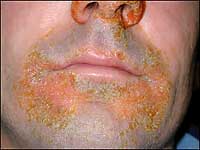
Staph impetigo. These infections prefer to infect moist, warm areas of the face, such as the nose and mouth.
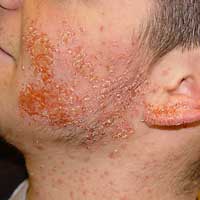
Staph contact dermatitis on the cheek.
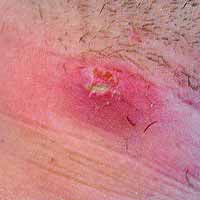
Carbuncle infection on the neck.
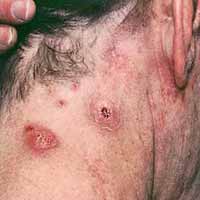
Infection of the neck and ear. Ear and eye infections are also common.
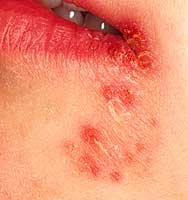
Staph on the face. Areas of irritation are commonly infected, including collars and shaving areas.
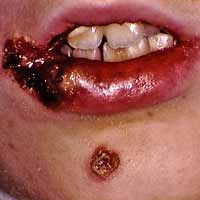
Staph impetigo. Face infections can leave unsightly, long-lasting and embarrassing scars.
When To See Your Doctor
See our PRIVACY POLICY
If your infection does not go away after a few days, if it begins spreading, or if symptoms such as pain, fever or chills develop, consider seeing your doctor as soon as possible.
These infections often form skin boils, blisters or pus-filled bumps and larger abscesses under the skin may form. The yellow or white pus inside of bumps and boils often drains on its own without being lanced. Never squeeze, lance, incise or drain these boils or bumps on your own. Doing this yourself can cause the infection to worsen or spread to your bloodstream. Incision and draining should only be done by a medical professional using proper techniques.
PRECAUTION: Taking the wrong antibiotic can double your chances of getting an antibiotic resistant infection.
Not all infections will require antibiotics, but some will. And, some strains of MRSA are now resistant to all antibiotics. Using the incorrect antibiotic can increase your chances of resistant infections. Antibiotics should be used prudently, as their overuse and misuse has created antibiotic-resistant Superbugs. Speak with your doctor if antibiotics are necessary or not and consider using Natural or Alternative remedies alone or together with your antibiotics to improve your chances of beating your infection.
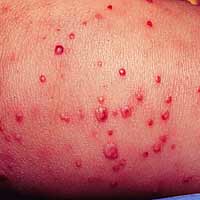
Areas of clothing friction (legs, buttocks) are prone to infection.
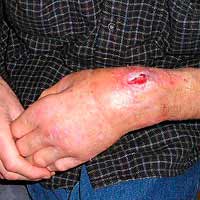
Staph infection on wrist.
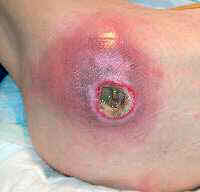
Open wound on the elbow.
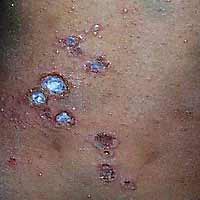
Staph on the back. Sweaty areas are commonly infected.
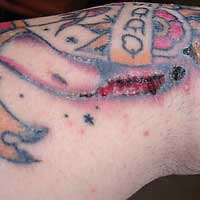
Tattoos can become infected with Staph or MRSA.
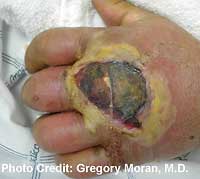
MRSA abscess on the hand. Pictures Credit: CDC/ Dr. Moran MD
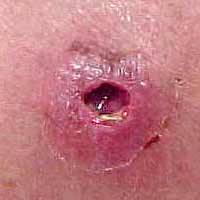
Abscess close-up.
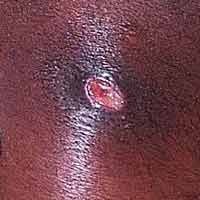
MRSA on the knee.
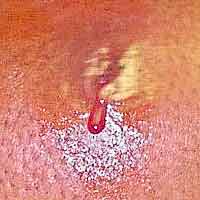
Staph infection with drainage.
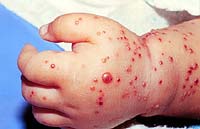
Baby with Staph skin infection.
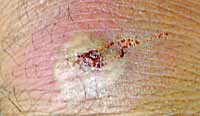
Staph infection on the arm.
Think you might be infected?
If you have the symptoms of either MRSA or Staph, then becoming informed about your options and what you are dealing is the first step. MRSA is resistant to most antibiotics, so getting tested before taking these drugs is a good idea. Knowing the pitfalls of the medical system and keeping your loved ones safe are also very important. Most of all, you have alternative treatment options that are safe, potent and free from the problems of antibiotic resistance.
Don’t put your life or those you love in danger. Timely and effective treatment can sometimes make the difference between life and death.
How to Win the Infection BattleMRSA and Staph are serious and potentially life-threatening infections. Antibiotics and conventional medicine often fail against these superbugs. Fortunately, there are powerful natural and complementary remedies for handling these infections.
The MRSA Secrets Revealed Program contains Michelle’s 3-Step Infection-Free Method™, a complete how-to guide to stop these infections. It includes the strongest remedies for skin, internal, nose and other types of infection. Tools for making antibiotics work better with less side effects are provided. The program also includes ways you can protect yourself and your family in hospitals and in the community.
Get started now by clicking the button below.