
Garlic – an ancient remedy with a modern twist
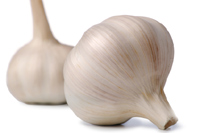
Garlic and it’s active ingredient allicin, have broad-spectrum activity against many types of infection.
Natural antibiotic substances were used to treat infections for thousands of years prior to the discovery of penicillin in the 1930’s. This aromatic plant was used by the ancient Egyptians, Greeks, Romans and Chinese to treat all types of infections, its use dating back over 5,000 years. Louis Pasteur, a founding father of Microbiology, studied the strong antibacterial properties of garlic in 1858. As recently as World War II, this herb saved thousands of lives by protecting open wounds from getting infected.
Today garlic is enjoying a renaissance of use, both in fighting infectious diseases and for support with several other health challenges. In France and Germany, herbal medicines are taught in medical schools and are commonly prescribed by doctors and covered by insurance. In the United Kingdom, a newly discovered MRSA garlic treatment containing stabilized allicin is showing excellent results against stubborn MRSA outbreaks where antibiotic drugs fail to work.
How garlic works
Garlic is much more than a popular food ingredient. It has powerful antibacterial, antiviral and antifungal properties, making it active against a broad range of infections. In addition to its infection-fighting abilities, it also helps lower blood pressure, promotes balanced intestinal health and is a powerful immune system booster.
Garlic produces the compound called allicin when crushed or bruised, which is responsible for the clove’s distinctive odor. Allicin and several other compounds in garlic have strong antibiotic activity. Allicin is rapidly oxidized, meaning it quickly breaks down after it is created. This means, as soon as you crush a clove, the anti-bacteria power starts to fade.
However, this amazing herb produces more than 100 active sulfur-containing compounds, proteins, and saponins when allicin oxidation takes place. Supplement products are available from fresh garlic, dried garlic, freeze-dried garlic, garlic oil, and aged garlic. But not all products contain the same amount of allicin. Be aware that the oil and aged varieties and most powders contain limited or no active allicin. The raw cloves must be used fresh or processed specially to retain the allicin in a stable form.
Bacteria can’t resist garlic
Many bacteria, including Staph and MRSA, adapt to synthetic antibiotics and learn to become resistant to treatment with drugs over time. Bacteria learn to resist these drugs rather easily because antibiotics are fairly simple, chemically-speaking, and are easy for bacteria like MRSA to ‘figure out’ how to become resistant.
Unlike antibiotic drugs, garlic is very complex, containing 27 known active ingredients and dozens more that work in unknown ways. Many of these ingredients can work together synergistically inside the body in intricate ways to fight infections. The herb is highly effective against resistant MRSA bacteria because it is too complex chemically for the bacteria to become resistant to. In contrast, the antibiotic drug Zyvox, which is prescribed for many MRSA cases, has only one active ingredient: Linzolid.
When you take garlic for infections, you are actually taking dozens of different “medicines” at once, each ingredient in a powerful evolutionary balance that enhances each of the other ingredients.
A proven MRSA remedy
 Properly prepared antimicrobial garlic products in powder and liquid form have been scientifically proven to kill MRSA in human clinical studies. In 2008, Dr. Ron Cutler and the University of East London (UEL) released the results from a human clinical study performed on 52 patients with hospital acquired MRSA (or HA-MRSA). All 52 patients were treated with a form of stabilized allicin and recovered fully from their MRSA infections. Many of the wounds healed in just 4 to 12 weeks and many patients had previously been treated with multiple antibiotics with no improvement.
Another recent study performed by Chungshan Medical University Hospital showed that other compounds in this therapeutic plant, not just allicin, have powerful natural antibiotic effects. In this study, mice were infected with the bacteria from actual human MRSA patients. The study found that garlic extract, diallyl sulphide and diallyl disulphide provided strong protective functions against MRSA by boosting the immune system.
Using garlic for MRSA infections
Garlic can be eaten raw or juiced, taken internally as supplements and used externally on skin infections. The medicinal plant has also been used successfully as a douche for troublesome yeast infections, a common secondary condition after people get MRSA. The best preparations are much more convenient because you can ingest much more without the distinctive bad breath one gets from eating the plant raw.
When you eat garlic, either fresh or in a stabilized form, many of its ingredients enter the bloodstream and are then excreted through the lungs. However, for internal infections, there are few preparations that are strong and potent enough to reach deeper into the body.
The highest potency is found in products that process the plant to stabilize and concentrate the allicin inside. A small dose of a stabilized allicin product can contain more active allicin than dozens of cloves of fresh raw garlic, yet be palatable and easy to ingest. There are several brands of such products that have varying degrees of potency.
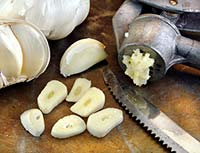
Garlic has blood thinning properties that could complicate some medical conditions. Photo: © JMB/Fotolia.com
Garlic precautions and limitations
Garlic is very safe with a long and successful track record as a food and natural medicinal herb. However, just like any other herb or food, the possibility exists for side effects, food allergies or interactions with other herbs, foods or drugs. Eating excessive amounts can hinder blood clotting and thin the blood and must be used carefully if you are taking anticoagulants, scheduled for surgery, delivering a baby or if you are taking certain anti-HIV drugs.
If you have concerns about contraindications, it’s best to consult with a health care professional familiar with your medical history and medications.
Despite garlic’s impressive track record of fighting infections and boosting the immune system, using any single treatment exclusively is usually not enough to ensure long-term freedom from Staph and MRSA. Having a recurrence or getting a secondary infection is likely unless the underlying cause is addressed and proper prevention measures are taken.

- What are essential oils and can they stop infections?
- Are there other herbs that combat Staph and MRSA?
- What’s the best remedy for your infection?
References
1. Natural Alternatives to Antibiotics, Dr. John McKenna, 1998
2. Herbal antibiotics, Stephen Harrod Buhner, 1999
3. Pungent, powerful garlic may help fight infection, heart disease, Catherine Golub, Environmental Nutrition, FindArticles.com, 30 November 2008.
4. Garlic, University of Maryland Medical Center (UMMC) Complementary and Alternative Medicine Index (CAM), 2008, https://www.umm.edu/altmed/articles/garlic-000245.htm#Supporting%20Research
5. University of East London (UEL) Press Release, Tuesday 10th June 2008, New Research Reveals Natural Weapon Against MRSA
6. Garlic extract and two diallyl sulphides inhibit methicillin-resistant Staphylococcus aureus infection in BALB/cA mice, Journal of Antimicrobial Chemotherapy (2003) 52, 974-980