
The Protective Role of Bacillus Probiotics
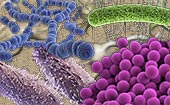
Mounting evidence links chronic diseases like IBS, Crohn’s, asthma and obesity to disruption of your intestinal flora.
Last updated October 2, 2025
Your digestive system is home to more than 100 trillion bacteria, yeast, and other microbes—weighing over three pounds in total. Together they make up your gut microbiome, which plays a huge role in immunity, digestion, and even protection from infections.
In fact, over half of your immune system lives in your gut1. When your microbiome is balanced, it’s constantly signaling your immune defenses and helping keep harmful bacteria like MRSA and Staph under control. But when your microbiome is disrupted, you become more vulnerable to infections and chronic health problems 2, 4.
The Probiotic Problem
Modern life has stripped away many of the good bacteria we used to get naturally from soil, fresh foods, and outdoor living. Instead, we’re surrounded by things that wipe them out:
- Antibiotics (often over-prescribed)
- Antibacterial products in soaps, toothpaste, and cleaners
- Chlorine-treated water
- Processed, sugary foods treated with pesticides and chemicals
The result? Friendly bacteria die off from both your skin microbiome and your gut microbiome, leaving empty space for harmful species to take over.
And to make matters worse, we rarely replenish what’s lost. In the past, people got probiotics every day from contact with the earth, raw foods, and natural fermentation. Today, most of our food is pasteurized, processed, or cooked, and our lifestyles are more sanitized than ever — so our natural sources of probiotics have nearly disappeared.
How to Restore your Microbiome
Probiotics are one of the easiest ways you can shift the balance of good and bad bacteria in your microbiome.
The first step is to avoid the constant assaults—cut back on chemical disinfectants, chemical antimicrobial soaps, processed foods, and unnecessary antibiotics. The second step is to replenish your gut with probiotics.
The challenge is that most commercial probiotics don’t survive stomach acid or provide enough potency to make a difference. In fact, studies suggest that as many as 90% of products on the market lack the strength, survivability, or compatibility to function as true probiotics in the body3.
That’s why spore-forming probiotics stand out. These hardy organisms have a natural shell that lets them survive digestion and reach the intestines alive, where they can help rebalance your gut.
The Special Role of Bacillus Probiotics
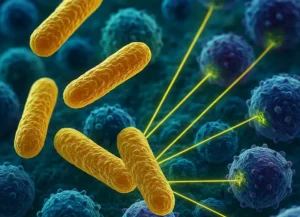
Bacillus subtilis produces natural antimicrobial compounds shown in research to act against certain gram-positive bacteria like Staph and MRSA.
Most probiotics work by simply “taking up space” in the gut to keep harmful bacteria in check. But certain spore-forming probiotics, especially Bacillus subtilis, go much further. These tough, spore-based organisms don’t just survive stomach acid – they arrive in your intestines ready to defend your microbiome.
Why This Matters for Staph & MRSA
Many people dealing with recurrent Staph or MRSA don’t realize that these bacteria don’t just live on the skin or in the nose – they can also colonize the digestive tract. When Staph is hiding in your gut, it acts as a reservoir that can keep fueling skin infections, boils, or nasal carriage. Supporting gut health with the right probiotics may help with this deeper, often overlooked source of colonization.
That’s where Bacillus probiotics, especially B. subtilis, stand out.
Watch: In this short video, Michelle explains how Bacillus subtilis works to fight harmful bacteria and support your microbiome.
Built-In Antimicrobial Properties
Researchers have discovered that B. subtilis devotes a surprising amount of its DNA to producing natural antibiotics and antimicrobial peptides6, 7, 8, 9, 10. These compounds act like a built-in defense system, helping to protect your gut from some of the most troublesome microbes, including:
- Staphylococcus aureus (Staph & MRSA) – B. subtilis produces lantibiotics such as subtilin and mersacidin, which are especially effective against Gram-positive bacteria like Staph.
- Clostridium difficile (C. diff) – Natural molecules like difficidin help suppress growth and biofilms.
- E. coli, Klebsiella, and Salmonella – Broad-spectrum action through compounds such as bacilysin and amicoumacins.
- Fungal invaders and biofilms – Lipopeptides like surfactin, fengycin, and iturins damage microbial membranes and help break down biofilms where pathogens hide.
This means B. subtilis doesn’t just coexist in your gut – it actively helps limit the overgrowth of certain microbes and create a healthier microbial balance.
A Probiotic Studied for Staph Colonization Reduction
One of the most exciting findings is that B. subtilis can help reduce Staph colonization. In a 2023 Lancet Microbe clinical trial, people who took a B. subtilis probiotic had significantly lower rates of Staph in their nose and gut compared to placebo5. This suggests Bacillus probiotics may help reduce colonization levels and support healthier microbial balance.
Our Top Bacillus subtilis Probiotics
 At Embrace Health Naturals, Michelle’s supplement store, the two Bacillus probiotics we use and trust most are:
- HU58 B. Subtilis – A high-potency, DNA-verified single strain of Bacillus subtilis that delivers powerful gut and immune support.
- MegaSporeBiotic – A broad-spectrum spore probiotic that includes HU58 plus four other Bacillus species for total microbiome restoration, especially for gut challenges and post-antibiotic use.
Both products are professional-strength, shelf-stable, and designed to survive the digestive tract so they can do their job where it matters most.
Learn more about Michelle Moore’s favorite professional strength Bacillus probiotics – For HU58 click here and for MegaSporeBiotic click here. You’ll be taken to Michelle’s supplement store. Also save 10% on your first order with coupon code: SAVE10

Feasting on Fermented Foods
Supplements aren’t the only way to boost your gut health. Traditional fermented foods are another rich source of living probiotics and beneficial enzymes. Good options include:
- Raw sauerkraut & kimchi
- Fermented vegetables
- Kefir (dairy or coconut-based)
These foods provide living cultures plus vitamins and minerals that support overall gut balance. Just be aware that most store-bought yogurts and commercial products are heavily processed, pasteurized, or loaded with sugar, so they offer little real benefit compared to truly raw and unprocessed ferments.
And if you’re dealing with recent antibiotic use, chronic infections, or gut dysbiosis, fermented foods alone may not be enough. In those cases, spore probiotics like Bacillus subtilis, which are studied for their role in maintaining microbial balance, can be more effective in restoring balance.


Michelle Moore
Microbiologist • Holistic Health Educator
Author of MRSA Secrets Revealed
Michelle Moore is a microbiologist, holistic health educator, and author of MRSA Secrets Revealed. After overcoming her own recurring antibiotic-resistant Staph infections without the help of conventional drugs, Michelle has dedicated her career to helping others do the same.
With more than 10 years in pharmaceutical research and over 20 years in holistic medicine, she provides science-based, natural solutions for people struggling with Staph and MRSA. Her approach has been endorsed by health professionals and has helped thousands of people recover from chronic infections.
References
1. J. International Archives of Allergy and Immunology 2002;95:2698
2. Host-Pathogen Interactions: the seduction of molecular cross talk, J. Gut 2002;50:32
3. Guidelines for the Evaluation of Probiotics in Food https://www.who.int/foodsafety/fs_management/en/probiotic_guidelines.pdf
5. Piewngam P, et al. Probiotic for pathogen-specific Staphylococcus aureus decolonisation in Thailand. Lancet Microbe. 2023;4(2):e75–e83.
6. Stein T. Bacillus subtilis antibiotics: structures, syntheses and specific functions. Molecular Microbiology. 2005;56(4):845–857. doi:10.1111/j.1365-2958.2005.04587.x
– Comprehensive review of antimicrobial compounds produced by B. subtilis (lantibiotics, lipopeptides, etc.) and their specific functions against pathogens.
7. Pinchuk IV, Bressollier P, Verneuil B, Fenet I, Sorokulova IB, Megraud F, Urdaci MC. In vitro anti-Helicobacter pylori activity of the probiotic strain Bacillus subtilis 3 is due to secretion of antibiotics. Antimicrob Agents Chemother. 2001;45(10):3156–3161. doi:10.1128/AAC.45.10.3156-3161.2001
– Demonstrates how B. subtilis secretes antimicrobial compounds that inhibit H. pylori.
8. Suva MA, Sureja VP, Kheni DB. Novel insight on probiotic Bacillus subtilis: Mechanism of action and clinical applications. J Curr Res Sci Med. 2016;2(2):65-72. doi:10.4103/2455-3069.198381
– Reviews mechanisms of B. subtilis, including antimicrobial production, immune support, and clinical use.
9. Piewngam P, Zheng Y, Nguyen TH, Dickey SW, Joo HS, Villaruz AE, et al. Pathogen elimination by probiotic Bacillus via signalling interference. Nature. 2018;562(7728):532–537. doi:10.1038/s41586-018-0616-y
– Shows how B. subtilis interferes with Staphylococcus quorum sensing and suppresses S. aureus colonization.
10. Ongena M, Jacques P. Bacillus lipopeptides: versatile weapons for plant disease biocontrol. Trends Microbiol. 2008;16(3):115–125. doi:10.1016/j.tim.2007.12.009
– Explains the broad-spectrum antimicrobial effects of surfactin, iturin, and fengycin lipopeptides.